When the Magic Walks Out the Door: How Losing One Cast Member Can Destroy a Show
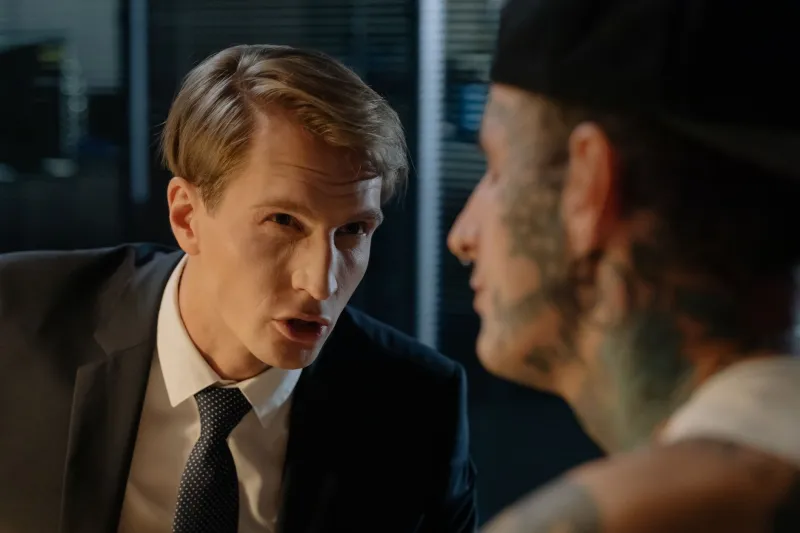
There's a specific kind of disappointment that hits differently than a bad episode or a weak season. It's the moment you realize the show you loved isn't the show you're watching anymore — and the reason has nothing to do with the writing. The spark is just... gone. Nine times out of ten, that spark had a face. Or two faces, working together in a way that felt effortless and irreplaceable.
Cast chemistry is one of TV's most underrated ingredients. We talk endlessly about showrunners, writers' rooms, and production budgets. But the invisible electricity between two lead actors? That's the stuff audiences actually show up for. And when it disappears — whether through a departure, a public falling out, or a behind-the-scenes feud that bleeds onto the screen — viewers feel it before they can even name it.
You Can Feel It Through the Screen
Here's the thing about on-screen tension: it's almost impossible to fake, and almost impossible to hide. Actors are trained professionals, sure. But when two people who used to genuinely enjoy working together start avoiding eye contact off-camera, that energy shifts. Scenes feel clunky. The banter loses its rhythm. What used to feel spontaneous starts to look rehearsed in the worst way.
Audiences are remarkably perceptive about this, even if they can't articulate exactly why a scene feels "off." Social media has made this phenomenon even more transparent — fans notice when two costars stop tagging each other in posts, stop showing up to the same press events, or give suspiciously clipped answers about their working relationship in interviews. The detective work happens in real time now, and by the time a network acknowledges any tension, viewers have already been whispering about it for months.
The Departures That Left a Crater
Look at what happened to Two and a Half Men after Charlie Sheen's very public, very messy exit in 2011. The show didn't just lose a lead — it lost the entire comedic engine that the series had been built around for eight seasons. Ashton Kutcher stepped in, and the ratings held for a while out of sheer curiosity, but the chemistry that defined the show's early run simply couldn't be reconstructed. The audience sensed it. Critics confirmed it.
Or consider Scrubs after Zach Braff significantly scaled back his role in the final season, which NBC tried to relaunch as a quasi-spinoff with a new cast. The friendships and the specific interpersonal dynamics between J.D., Turk, and the rest of the original Sacred Heart crew were the whole point. Strip that away and you're left with a medical comedy with no soul.
Even Grey's Anatomy — a show that has somehow outlasted almost every cast member it started with — took serious hits whenever a core pairing dissolved. Patrick Dempsey's departure in season 11 didn't just remove a character; it removed the gravitational center that had held Meredith Grey's story in orbit for over a decade. The show adapted, but a lot of longtime fans never fully came back.
When It's Not a Departure — It's a Feud
Sometimes nobody leaves. That's almost worse.
When Gossip Girl was still in its original run, rumors about tension between certain cast members circulated constantly. Whether or not the specific details were accurate, the energy in later seasons felt different — more guarded, less playful. The effortless dynamic that made those early episodes so addictive started to feel like it was being performed rather than lived.
The Desperate Housewives cast feud is practically legendary at this point. Teri Hatcher's reported isolation from her costars became tabloid fodder, and while the show continued for several more seasons, it never quite recaptured the cultural dominance of its early years. Coincidence? Maybe. But it's hard to ignore the timing.
More recently, the long-running speculation about behind-the-scenes friction on Don't Worry Darling — a film rather than a series, but the principle holds — demonstrated just how much audiences factor cast dynamics into their viewing experience. The press tour alone became its own storyline, and it overshadowed everything the movie was actually trying to say.
Why One Relationship Can Carry an Entire Show
Not every ensemble depends equally on every member. Most shows have a load-bearing relationship — two characters whose dynamic functions as the emotional spine of the whole series. It might be a will-they-won't-they romance, a rivalry, a mentor-student bond, or just a friendship so specific and well-drawn that it becomes the reason you keep coming back.
When that relationship breaks down — either because one person exits or because the real-world dynamic between the actors has curdled — the show loses its structural center. Writers can try to compensate by leaning harder on supporting characters or introducing new cast members, but audiences are rarely fooled for long. You can reframe the story, but you can't manufacture the chemistry that was already there.
This is partly why shows like Brooklyn Nine-Nine managed to survive network cancellation and platform switches: the ensemble chemistry was so broadly distributed and so genuinely warm that no single departure could have gutted it completely. It's also why The Office struggled so visibly after Steve Carell left — not because the remaining cast wasn't talented, but because the show's entire comedic and emotional logic had been organized around Michael Scott's relationships with everyone else.
What This Means for How We Watch
If you've ever bailed on a show mid-run and struggled to explain why, there's a decent chance this was the culprit. Not a bad plot twist. Not a dropped storyline. Just a feeling — subtle but persistent — that the people on screen no longer actually wanted to be there together.
That's worth paying attention to, honestly. Your instincts as a viewer are more calibrated than you might give yourself credit for. The shows that feel alive usually have casts that genuinely like each other, or at least genuinely respect each other's craft. The shows that feel like they're running on fumes? Often, the real story is happening off-camera.
Next time a show you used to love starts feeling hollow, don't just blame the writers. Sometimes the friendship breakup already happened — you're just watching the aftermath.